Linkpost for https://manifund.substack.com/p/ai-for-epistemics-hackathon
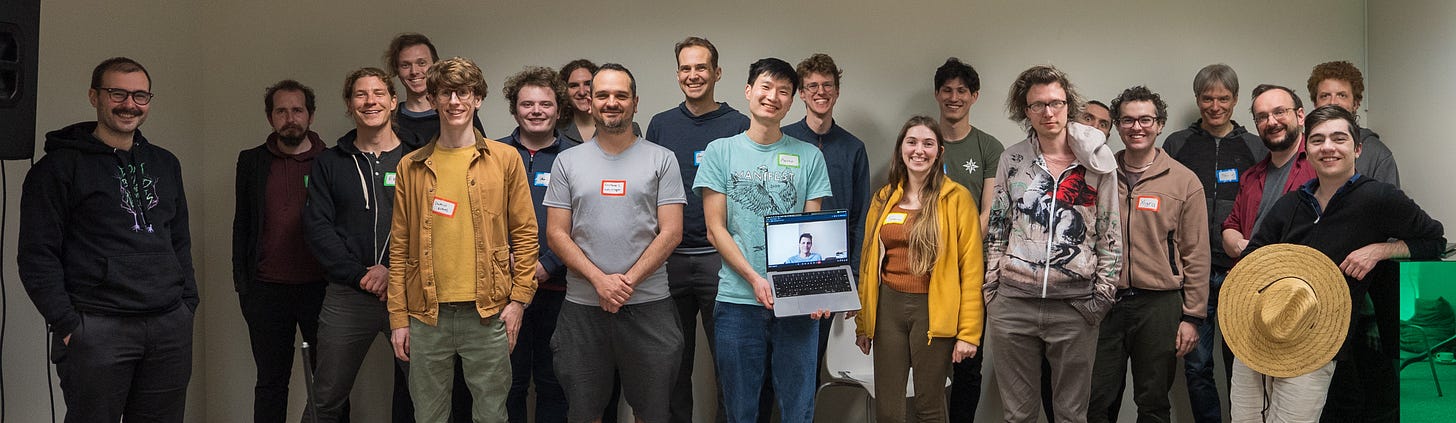
AI for Epistemics is about helping to leverage AI for better truthseeking mechanisms — at the level of individual users, the whole of society, or in transparent ways within the AI systems themselves. Manifund & Elicit recently hosted a hackathon to explore new projects in the space, with about 40 participants, 9 projects judged, and 3 winners splitting a $10k prize pool. Read on to see what we built!
From the opening speeches; lightly edited.
In short - AI for Epistemics is important and tractable.
Why is it important? If you think about the next few years, things could get pretty chaotic. As everyone rushes to integrate AI systems into every part of the economy, the world could change more rapidly than it does today. There's significant risk that people and organizations will make mistakes for relatively uninteresting reasons—simply because they didn't have enough time to think things through.
If we can make it easier for people to think clearly and carefully, that's really important. People will use AI tools to help them make decisions either way; eventually unassisted decision-making just won’t be competitive anymore. This is a lever: the more these tools actually help people make wise decisions, or help them figure out whether they're right or wrong about something, the better off we'll be.
AI for Epistemics is also tractable now in a way it wasn't before. We're just reaching the point where models are good enough and cheap enough to apply at scale. You can now realistically say, "Let's analyze all news articles," or "Let's review all scientific papers," or thoroughly check every sentence of a document, at a level of detail that wasn't feasible before.
Given good ideas for epistemic tools, the implementation cost has dropped dramatically. Building significant products in hackathons has become much easier. You can basically copy and paste your project description into Cursor, type "please continue" five times, and you'll have a working demo.
The key challenge we'll need to think about today is: how can we tell if we're actually making things better? What evidence can we see that would lead us to believe a tool genuinely improves people's thinking, rather than just being a fun UI with knobs to play with?
I'm really excited about this hackathon. This is the event I've been most excited about for quite a while. I'm very grateful to Austin for creating this space for us.